A healthy body equals a healthy mind. Thanks to my addictive personality, in order to function well, stay motivated at the top of my game I like to stay healthy. There are three main areas of life that I like to continuously work to improve:
- Nutrition
- Exercise
- Personal Finances
In this post I’ll focus on nutrition, in particular how I believe most people could benefit from both better health and save money by following some of the advice below.
I like to think that I eat relatively healthy food most of the time. However like anyone I’m not immune from the odd chocolate binge or deep fried indulgence but 95% of the time I’m a healthy eater.
I don’t diet, I just eat well most of the time.
I know my ‘fighting weight’ is around 71kg and I allow myself about a 2-3kg tolerance either way. A quick look at my waist tells me if I’m up near 75kg and my wife starts to grumble if I get down below 70kg and become too scrawny.
In this post I’m going to set out a typical week in terms of the meals that I eat, along with a rough idea of cost before laying down some of the healthy eating rules I follow.
Assumptions
I don’t count calories – Instead I just focus on eating freshly prepared non processed foods as much as I can. Foods that contain high amounts of fat and sugars are avoided.
I am vegetarian (ish) – Being married to a vegetarian that doesn’t like/want meat in the house means I only eat meat when dining out. As a result the plan below is meat free. That makes it both healthier and cheaper. If you think vegetarian food doesn’t taste as good then you’re simply not cooking it right. Take a trip to Italy or India and you’ll soon taste just how good meat free food can be.
Cheapness – Good food need not be expensive. In fact good quality fresh food usually turns out to be far cheaper than most of the pre-packaged, convenience junk food that fill supermarket aisles.
Disclaimer: I’m not perfect. The meals set out below are an illustrative week not an actual food diary. There are days when you’ll find me in Pret-a-Manger or going out for a meal. The below is my ‘target’ diet and in reality it represents what about 90% of what my actual consumptions looks like over a week.
Breakfast
Start the day with a healthy nutritious breakfast and you’re much less likely to crave sugary/fatty foods throughout the day. You will also be much more motivated to take some exercise and live a more active existence if your body is fuelled correctly each morning.
Here’s my typical breakfast menu for the week:
- Monday to Friday: Overnight Oats (see recipe below)
- Saturday: Scrambled eggs, dill, chillies & steamed spinach
- Sunday: Poached egg on toast (with home made bread!)
Eating a healthy breakfast can be challenging when your mornings tend to be a mad scramble into the rat race. For a while I was making muesli in the office which went well apart from the usual problems of colleagues stealing my milk out of the fridge or me forgetting to stock up on muesli on the way to the office. However things changed when I discovered overnight oats.
Overnight oats are a sort of mix between Swiss muesli and cold porridge. It’s incredibly simple to make and is prepared the night before (in about 2 minutes) so in the morning you just take it out of the refrigerator, add some more toppings (if required) and you’re good to go. You can eat it easily on the train, in the office, pretty much anywhere. More importantly it is very cheap and incredibly healthy.
Overnight Oats Recipe (The Breakfast of Champions)
- 1/2 cup of organic rolled oats
- 1/2 cup of water
- 1 tablespoon of chia seeds (optional)
- 1 desert spoon of yoghurt
- pinch of salt
- pinch of ground cinnamon
- 1/2 banana (chopped)
Add all of the ingredients to a pot/bowl or jar, mix and pop it in the fridge overnight. In the morning you can add a little more water (or milk) if required and top with more fruit or chopped nuts. The different combinations of toppings you can try are endless. I tend to supplement with seasonable fruit/berries in the summer and nuts in the winter.
In winter you can top it up with a little boiling water or pop it in the microwave and serve it warm, more like a traditional Scottish porridge.
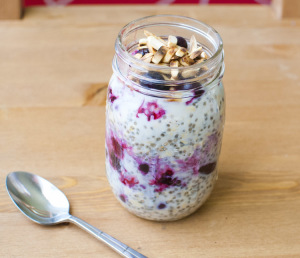
Of course no breakfast is compete without good coffee.
Lunch
Lunches can be particularly tricky when you’re a runner in the rat race like me. If I’m not careful I regress to a shop bought sandwich everyday, eaten at my desk. While a sandwich might not seem too bad, the bread is usually loaded with preservatives and the fillings all too often made tastier with the addition of too much salt and fat laden dressings.
The best way that I’ve found to keep mid week lunches healthy is to have a mixture of left overs from midweek dinners and simple quick to make salads or sandwiches. Here’s a typical weeks lunches:
- Monday: Home made cheese sandwiches (from Sundays home made bread) with salad & mustard
- Tuesday: Jacket potato & cottage cheese (spud from the work canteen, cheese from the supermarket)
- Wednesday: Courgette pasta & salad (leftovers from Tues night)
- Thursday: Cous cous salad (including leftovers from Weds night)
- Friday: Vegetable bake (leftovers form Thurs night)
- Saturday: Home made pizza
- Sunday: Mushrooms on toast (with home made bread)
Dinner
With the lifestyle I currently lead (long work hours) meals that are quick to assemble are required to ensure our mid week diet remains healthy.
- Monday: Frittata with spinach, chilli & any left over vegetables from the weekend1
- Tuesday: Courgette Pasta & Salad
- Wednesday: Green lentil, green bean, beetroot & feta salad
- Thursday: Home made vegetable bake (from the freezer, pre-made in batches)2
- Friday: Asian style vegetable noodle broth3
- Saturday: Indian daal, egg curry (pictured below), vegetable sabzi & rice
- Sunday: Vegetable tart with steamed vegetables

I hear a lot of people (including family members) making excuses about their diets with the usuals being that they either don’t have the time or money to eat fresh, healthy goods. It’s got to be said that in virtually all cases this is absolute nonsense.
Both my wife and I leave the house at 6.30am each day and don’t walk in the front door until around 8pm on an average day. Being away from home for a minimum of 13-14 hours each work day doesn’t leave much time to clean, socialise, exercise, perform household chores, sleep and of course cook. However with a little preparation, some basic planning a healthy diet of freshly home cooked food is actually very easy to have.
Cost
Looking back at my expenses xls we typically spend just under £150 per month (often a lot less) on food & groceries. This is pretty good going at it includes the odd shop bought lunch and wine for the weekends.
The Healthy Eating Low Cost Rules
Rule #1: Buy in bulk
Tinned, dried and non perishable goods are bought in bulk at either the local Asian supermarket, a traditional supermarket or Costco. We probably visit one of these places every 2-3 months. Fruit and vegetables and dairy products are typically all we need to buy on a weekly basis. Given the lack of expensive meat in our shopping we tend to ‘upgrade’ our vegetables and buy organic produce where possible. Things like rice, flour, potatoes are all bought in 25kg sacks.
Rule #2: Avoid take aways
Take aways are usually always both unhealthy and expensive. With a little thought and effort you can usually make much nicer food for a lot less $. If I’m paying someone else to cook my food I’d rather go out to eat it as you usually don’t pay much more and get a higher quality product and service. I honestly couldn’t tell you when the last time a take away was delivered to the Money Tree household, maybe 8+ years ago.
Rule #3: Don’t keep junk in the house
If there are no biscuits, cake or crisps in the house then you’ll most likely not eat any each evening. I’m terrible for this, I’ve been known to raid Mrs UTMT’s baking cupboard in search of cooking chocolate in moments of desperation. We stopped buying snacks several years ago to prevent my binge eating tendencies.
Rule #x4: Plan ahead
The first thing I do when I get back from work in the evening is to make our overnight oats for the next morning, even before I take my shoes off or get changed. By planning ahead like this I’m far less likely to grab a bacon sandwich on the way to the office. Likewise we try to roughly plan our evening meals for the week on a Sunday. By having a plan we’re more likely to shop sensibly and less likely to deviate in to the world of junk.
Rule #5: Cut yourself some slack
It’s impossible to expect yourself to eat healthily 100% of the time. So long as you stick to your healthy eating program 90% of the time then you should feel no guilt about the occasional chocolate bar or bacon sandwich. For example if I’m out for a big meal with friends one evening I’ll make sure the day before and afterwards I’m a very good boy.
Rule #6: Not too many carbs
When cooking your meals make a conscious effort to cook less carbs and bulk out the plate with more vegetables. Don’t forget protein fills you up and stops hunger so if you’re going veggie learn to love eggs and legumes so you avoid becoming a pasta addict (this is particularly important if you’re following a vegetarian).
Rule #7: Eating healthy doesn’t mean eating less
I suspect most ‘diets’ fail because people go from eating significantly too much to significantly to little. If you switch to a healthy diet and start getting headaches it’s a sure sign that you’re not eating enough to fuel your body. Remember that vegetables have much less calories in them than carbohydrates and fats so it’s easy to under eat on a veggie heavy diet. If you’re struggling add some calorie dense legumes (pulses, lentils, dal or beans) to your daily intake.
Rule #8: Grow some herbs
Herbs a wonderful things. I’m sure with a bit of research you could discover lots of health benefits of eating fresh herbs however their main benefit from my perspective is their ability to make things taste awesome. With zero effort I have an unlimited supply of fresh thyme, rosemary, sage and bay in the garden. In the summer I’ll also grow annual herbs like parsley, coriander, dill and of course basil. For very little effort having access to all these herbs can transform the quality of food you cook.
Rule #9: Invest in a slow cooker
As a child I always associated slow cookers with food that tasted like school dinners. However after being given one a couple of years ago I’ve been amazed at the quality of food you can make with one while also saving ‘cooking time’. Slow cooking is perfect for making Indian daals, Mexican style black beans, soups and vegetable stews. The internet is awash with incredible slow cooker recipes if you do a little research.
Rule #10: Cut down on the booze
There has been lots in the press recently about the amount of calories in alcohol. I avoid drinking at home on school nights and instead force myself to wait for the weekend before opening a bottle of wine or having a cheeky beer or two. Doing this helps me avoid ‘liquid calories’ and makes me more likely to want to exercise during the week.
I hope you found this post useful. If there’s demand I might be persuaded to share any recipes mentioned above.
Notes:
1Weekends often involve some deviation from the healthy plan so I like to keep Monday’s dinner quite light and low on carbs.
2Substitute vegetable bake here for vegetable stew, mac n cheese, dal or some other similar home made dish that can easily be frozen
3Saturday morning usually involve long distance cycling so Friday night carbohydrate binges are required 😉


Leave a Reply to Mr. FSF Cancel reply